

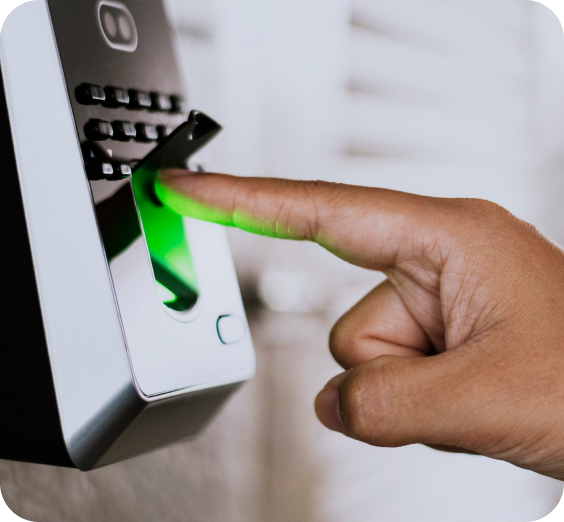
For years, biometric time clocks have been a common way for companies to record employee
attendance. Fingerprint scanners, facial recognition devices, and other biometric systems
helped businesses move away from traditional paper-based timecards and manual attendance
tracking.
But as workplaces become more mobile, flexible, and technology-driven, many companies are
starting to look for better ways to manage attendance.
Instead of requiring employees to clock in at a fixed biometric device, businesses are
turning to mobile attendance solutions that can verify an employee's identity, location, and
time directly through a smartphone.
So, why are companies moving away from traditional biometric time clocks?
1. Employees Are No Longer Always at One Location
Traditional biometric time clocks work best in workplaces where employees regularly report to the
same
physical location.
However, many businesses now have employees working across different branches, job sites, client
locations, warehouses, and field operations.
Requiring employees to travel to a specific biometric device simply to record their attendance can
be
inconvenient and inefficient.
Mobile attendance systems allow employees to clock in and out using their smartphones, making
attendance
tracking more practical for businesses with distributed or mobile teams.
2. Long Queues Can Affect Productivity
When many employees arrive at the same time, biometric time clocks can create queues.
Employees may have to wait for their turn to scan their fingerprint or face before they can
officially
record their attendance. While each transaction may only take a few seconds, these delays can add up
across a large workforce.
A mobile attendance solution can reduce congestion by allowing employees to record attendance
directly
from their phones.
This can make the start and end of shifts smoother, especially for companies with large numbers of
employees.
3. Attendance Needs More Than a Time Stamp
Knowing that an employee clocked in at 8:00 AM is useful, but businesses may also need to know where
the
employee clocked in.
This becomes especially important for field employees, delivery teams, sales representatives,
service
crews, and workers assigned to different locations.
Modern mobile attendance systems can combine several pieces of information, such as:
- Employee identity
- Date and time
- GPS location
- Attendance photo
- Clock-in and clock-out records
This provides businesses with a more complete attendance record instead of relying on a simple time stamp.
4. Mobile Attendance Helps Support Field Operations
A major limitation of traditional biometric time clocks is that they are tied to a physical device.
For employees who work outside the office, this can make attendance tracking difficult.
Imagine a technician assigned to a customer's location, a delivery employee visiting different
sites, or
a construction worker reporting directly to a project site. Requiring these employees to return to
an
office just to record attendance is impractical.
With a mobile attendance system, employees can record their attendance from an approved location
while
the company can capture the necessary verification details.
This makes attendance management more suitable for modern field-based operations.
5. Identity Verification Can Be Done Through Mobile Devices
One concern with any attendance system is making sure that the person recording attendance is
actually
the employee assigned to the shift.
Mobile attendance solutions can use selfie-based verification to help confirm employee identity
during
clock-in and clock-out.
Instead of relying solely on a physical fingerprint scanner, the employee can take a selfie through
the
attendance application. The recorded photo can then serve as part of the attendance verification
process.
This can help businesses strengthen attendance monitoring while giving employees a more convenient
way
to record their time.
6. GPS Adds Location Verification
For companies with employees working across multiple locations, GPS can provide another layer of
attendance verification.
A mobile attendance application can capture the employee's location when they clock in or out.
Businesses can use this information to verify whether the attendance event occurred at an
appropriate
location.
This can be particularly useful for organizations managing:
- Multiple branches
- Construction sites
- Delivery teams
- Service personnel
- Sales teams
- Remote employees
- Off-site operations
Combining time, identity, and location creates a more informative attendance record.
7. Less Dependence on Physical Hardware
Biometric time clocks require physical devices that need to be installed, maintained, and monitored.
Businesses with multiple locations may need several attendance machines, which can increase hardware
costs and maintenance requirements.
Mobile attendance solutions use devices employees already carry: their smartphones.
This can reduce the company's dependence on dedicated attendance hardware and make it easier to
expand
attendance tracking across different locations.

8. Faster Access to Attendance Records
Traditional attendance systems can sometimes require data to be transferred from physical
devices before HR teams can review it.
Cloud-based mobile attendance systems can make attendance information accessible through a
centralized platform.
Instead of waiting for manual data collection, HR and administrators can review attendance
records and monitor employee timekeeping through the system.
Having centralized information can also make it easier to identify attendance issues and
prepare records for payroll processing.
9. Better Integration With Modern Workforce Management
Attendance is rarely an isolated HR process.
Employee time records may eventually be used for payroll calculations, overtime processing, leave
management, scheduling, and reporting.
A modern attendance system can help connect these processes by providing accurate and structured
attendance data.
When attendance information is easier to access and manage, HR teams can spend less time manually
transferring records between systems.
10. Convenience for Employees
Technology should make work easier—not add another step to the employee's day.
Mobile attendance provides employees with a familiar and convenient way to record their time.
Instead of finding a specific machine before or after a shift, employees can use their smartphones
where appropriate.
This is particularly valuable for companies with flexible work arrangements or employees who
regularly work outside a traditional office.
The Future of Employee Attendance Is Mobile
Biometric time clocks played an important role in modernizing employee attendance. However, the way
people work has changed.
Businesses now need attendance solutions that can support multiple locations, field operations,
mobile employees, and more flexible working environments.
This doesn't necessarily mean biometric technology is becoming obsolete. Rather, companies are
looking for attendance solutions that provide more flexibility while still offering reliable
employee verification.
Mobile attendance combines convenience with important attendance data such as selfie verification,
GPS location, timestamps, and secure cloud storage.
Simplify Attendance Management With MySelfieTime
For businesses looking to move beyond traditional biometric time clocks, MySelfieTime provides a
mobile approach to employee attendance.
Employees can record attendance using their smartphones, while the system captures key information
such as selfie verification, GPS location, and timestamp records. Attendance data can then be
securely stored and managed through the cloud.
Whether your employees work in an office, branch, project site, or field location, a mobile
attendance solution can help make timekeeping more flexible and easier to manage.
The workplace is becoming more mobile. Your attendance system should be too.
Discover how MySelfieTime can help your business move beyond traditional time clocks and create a
smarter, more flexible way to manage employee attendance.


